Cusco, Peru
September 19, 2026
|
On Day 3, it is time to leave Lima and fly to Cusco (Cuzco is the Incan spelling). The flight is just over an hour, but a guide said it's about a 9 hour bus ride through the
mountains. Cusco originally was an major Incan city, until the takeover of the Spanish in the 1500's. The city has around 500,000 people, and sits about 3400 metres above
sea level (11,150 feet). The air is thin, and it is noticeably difficult to breath when walking up steps or even inclines.
After arriving, the Nodo Hotel (with a spectacular open eating and sitting area) offered us Coca Tea. It is designed to curb altitude sickness and symptoms like nausea and headaches,
and not to be taken near bedtime, like a certain someone with a beard did. And the hotel suite was massive.
First destination was San Francisco de Asís Church and Convent. Franciscan friars arrived in Cusco in 1534, and built a small church. By 1538, they relocated to the Plaza de Armas
in Cusco, taking over the former Inca palace of Qasana. Finally, in 1549, they moved to their current location near the Mercado Central de San Pedro. In 1572, construction of a
church dedicated to Francis of Assisi began. The original structure was demolished in 1645 for modernization, but the 1650 Cusco earthquake destroyed most of the progress.
The second and current church was completed in 1652. The convent is attached to the church and is now a museum, with several catecombs, and a good number of paintings. There is a
stairwell up to the bell tower that nobody seems to use, I was by myself, with stellar views of the bells, and all over Cusco. After that, it was a trip through the streets of Cusco,
eventually ending up at the massive covered Mercado Central de San Pedro, with many shops on the outside of it too. Dinner was soup, the local Cusquena beer and guinea pig
(the entire little pig, head and all) with potatoes in yellow Huancaína sauce and rice. Guinea pig, which is mostly bones, has meat that tastes somewhat like ... dark meat chicken.
|
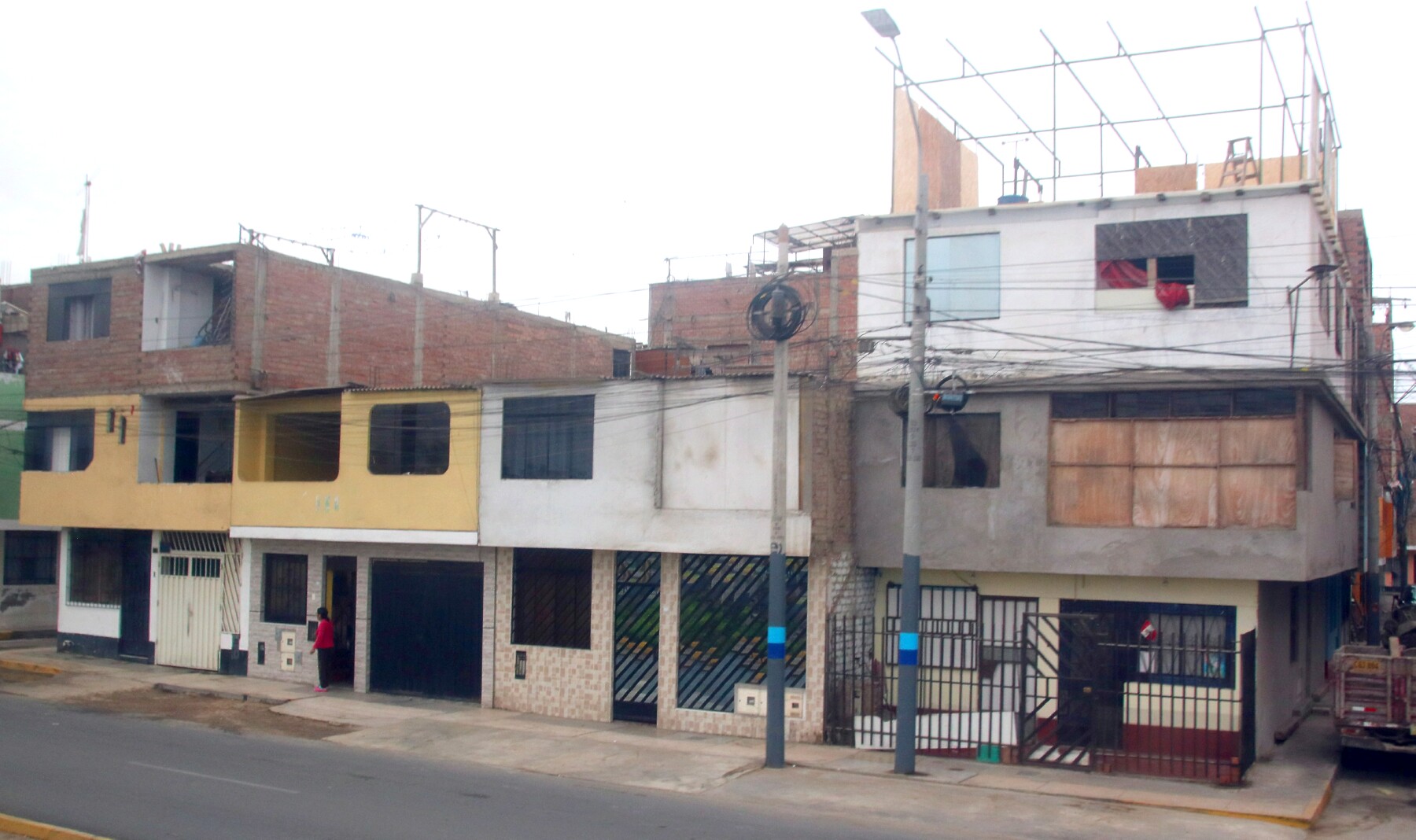
Above: Typical homes and business buildings in much of Lima.
|
|


