Day 8 in Santorini. With one less day in Santorini than on the original schedule, plans changed a bit. Started with a bus ride to Fira from Kamari, a brief walkabout,
but then another bus to the ruins of Ancient Akrotiri.
The earliest evidence for human habitation of Akrotiri can be traced as early as the fifth millennium BC when it was a small fishing and farming village. By the end of the
third millennium BC, the community developed and expanded significantly. A factor for Akrotiri's growth may be the trade relations it established with other cultures in the
Aegean Sea, with fragments of foreign pottery found at the site. Akrotiri's prosperity continued for about another 500 years; paved streets, an extensive drainage system,
the production of high-quality pottery and other craft specialization all point a sophisticated settlement. It all came to an end in the 16th century, but not sure of the exact
date ... unusual growth patterns observed in tree rings in 1597, 1560, 1546 and 1544 BC are consistent with a major volcanic event in any of those years.
After viewing Ancient Akrotiri excavations, hiked up the hill towards the modern village of Akrotiri. In the centre of the picturesque village, with great views of the caldera,
is the Venetian Castle of Akrotiri (La Ponta), a 13th-century fort on Santorini’s southwestern hill. While heavily damaged by a 1956 earthquake, its central Goulas (watchtower)
survives. After the hike and the walk around the village, took the bus back to Fira, then Kamari to relax.
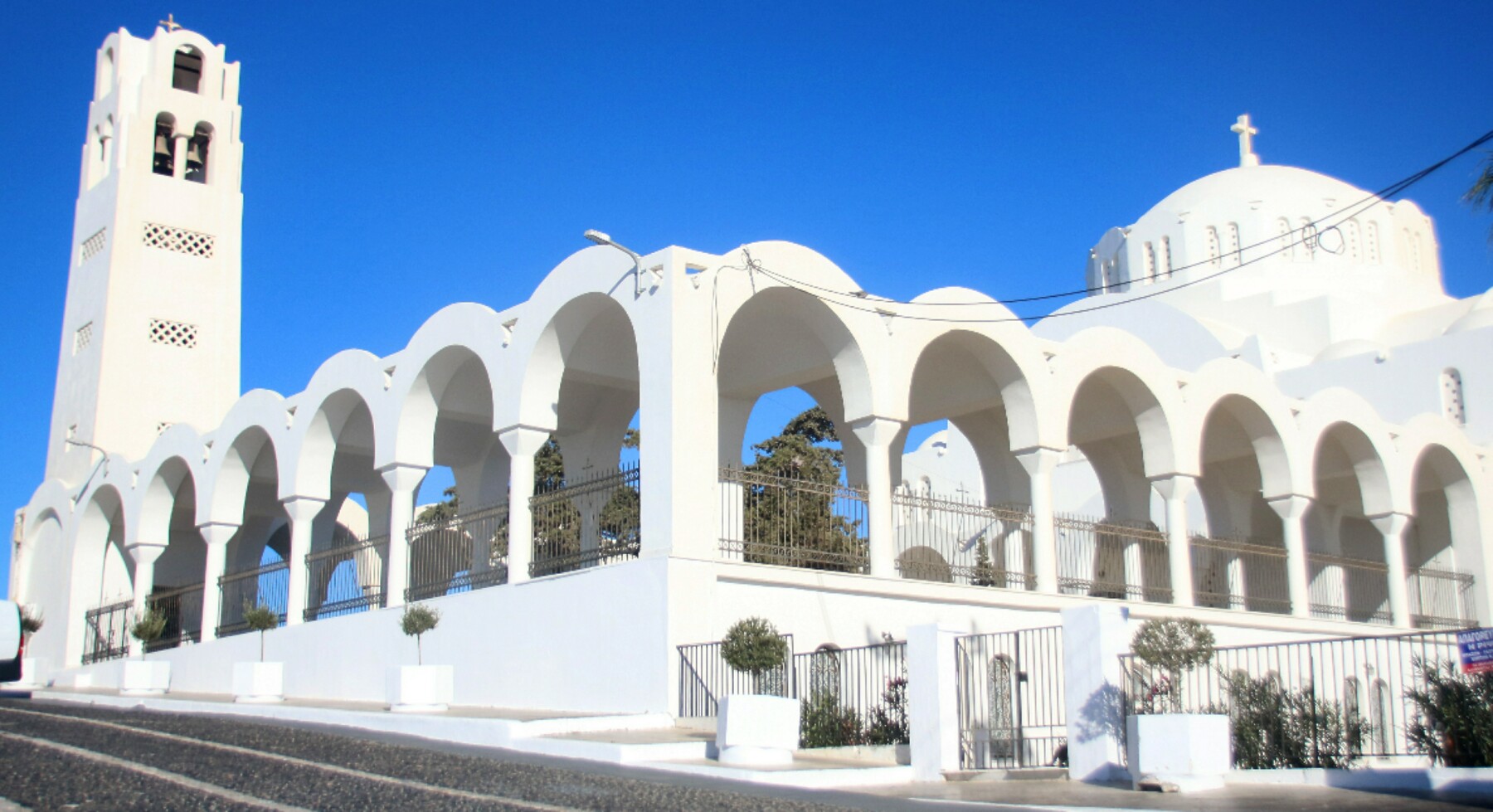
Dinner was in Fira along the main street by the Metropolitan Church of the Presentation of the Lord, at Ouzieri Tavern. My third trip there, this time had the Octopus with onions
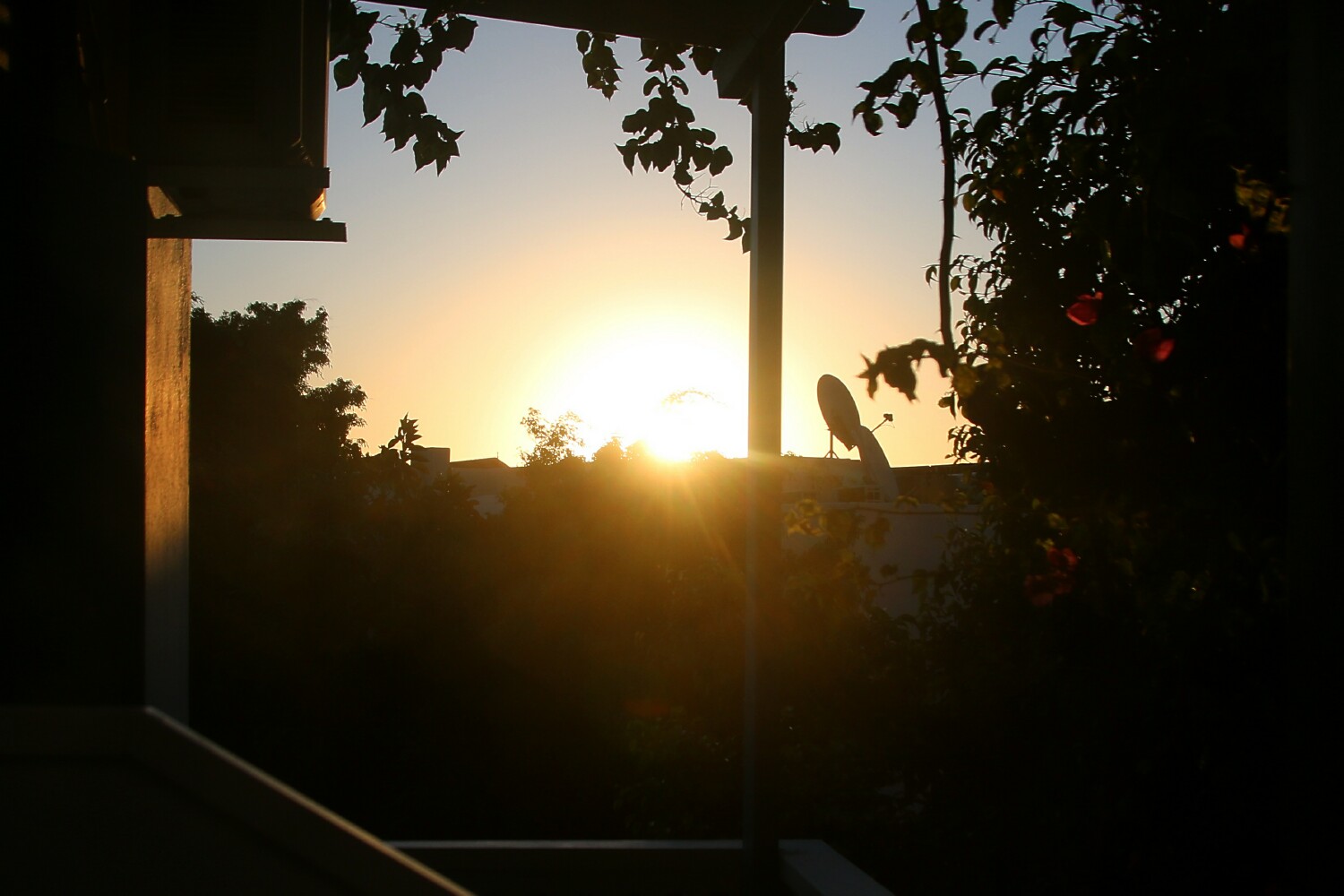
and rice, with a Crazy Donkey Silver IPA. Finally, sunset over the Caldera and Thirasia from Fira, and a bit of time in Kamari before bed.
|